Friday, September 30, 2005

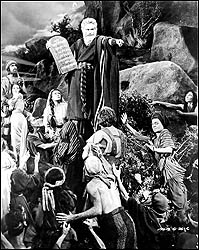
10 Commandments of Computer Ethics learned in IS 201

1. Do not use the computer to intentionally hurt others.
2. Do not use the computer to probe into the privacy of others.
3. Do not use the computer to steal from others.
4. Do not use the computer to destroy the reputation of others.
5. Do not use the computer to copy software and distribute them.
6. Do not use the computer to deprive others of their own computer resources.
7. Do not use the computer to downgrade the moral fiber of the society.
8. Do not use the computer to spread hoaxes and scams.
9. Do not use the computer to take advantage of the weaknesses of others.
10. Do not use the computer to crack into the system of others and use their computer resources.

Source of Photo: http://www.crystalinks.com/mosestablets.gif

Module 13: Related Philippine Laws

Are you in favor of the enactment and enforcement of laws that will regulate and control the use of computer technology? Why or why not? Defend your answer.

Computer Technology has so much potential in helping us elevate our lives. The internet for one is huge source of valuable information in different areas of daily living. But like any other good thing when abused or used with a bad intention, it produces ill effects to a wide range of people. Nuclear technology is a break through in science but now its use is being regulated so as not to create weapons of mass destruction. The same thing for computer technology, we are aware of its power to enable people gain and spread information. If the kind of information is not regulated, many evil minds may take advantage of the people, and if quantified, that may cause more damage than good.

The next questions are: Who will regulate and control? How will regulation be implemented? What to regulate? These are important questions because in submitting to a regulatory body we are giving them rights on our behalf to decide what and how to control and regulate computer technology. The “What and How” may be too strict that we are so limited to what we can access and how we access information.

If you were to decide the case of Landmark Hacking, what will be your judgment? Support your answer.

I think Garcia is guilty.
According to Computer Ethics Institute, one of the 10 commandments of Computer Ethics is:
Thou shall not use other people’s computer resources without authorization.

Thames International protected the account with a password and had entrusted this important information to Manalac, the one who gave Garcia the password. Even if Manalac told her that it is a common practice for other employees to access and use the account as long as the school was not using it, she should have known better as the school’s system supervisor. She should have verified with the school if employees are allowed to access and use the school account, and sought permissions from the authority. Not because, something is widespread and common practice does not mean that it is right. Somehow, she also took advantage of using the account freely because of the weak security checks implemented on the school’s account.

Module 12: Computer Crimes

What constitutes a computer crime?
There are just few instances, if any, where the person committing a computer crime is not aware that what he is doing is not permissible by law, and therefore illegal. The common denominator for acts of computer crime is the same as other crimes – intention to hurt others and willful desire to take advantage of others for personal gain.

Examples of Computer Crime
Filipino hacker
Source:http://www.crime-research.org/news/29.09.2005/1519/
Date: September 29, 2005
Original: inq7.net
By: ERWIN LEMUEL OLIVA

In this case the Filipino hacker penetrated the government portal “gov.ph” and other government websites causing the site to crash and denying the access to websites (also called denial of service). The hacker pleaded guilty, making this case to be the first Philippine hacking case to end in a conviction.

Man guilty of child porn case
Source:http://www.crime-research.org/news/27.09.2005/1516/
Date: September 27, 2005
Original: JS Online

A man faces 17 ½ years of prison term after pleading guilty of possession of child pornographic materials. He downloaded child pornography onto his home computer and argued that the material is for visual interest only.

Former pastor faces fraud charges
Source:http://www.crime-research.org/news/14.08.2005/1429/
Date: August 14, 2005
Original: WTHN.com

A pastor was charged with fraud involving an internet scam. He defrauded a credit union and used the money to take part in an e-mail scam in which operators pose as Nigerian government officials – with an intention of persuading the people to send them money and bank account numbers. The fraud victims were told in emails that they can earn money by helping to raise funds from Nigeria to the US. The pastor claimed that he himself is a victim of the scam.

Module 11: Intellectual Property Rights

Whelan vs. Jaslow case
Court Ruling: Guilty
Basis of Court Ruling: Structure (sequence and organization) of a software program can be protected by copyright.

Personal Ruling: Not Guilty
Basis of Personal Ruling:
Usually the code of a software package or program is not available to the public, and it would be difficult to acquire unless it’s an insider’s job.

Because both Whelan and Jaslow engage in the same dental related business, they may have similar software requirements. The fact that Whelan did not copy any part of the code, and implemented every software functional requirement on their own, for me they did not do anything morally bad.

Computer Associates vs. Altai case
Court Ruling: Not Guilty
Basis of Court Ruling: Structure (sequence and organization) of a software program cannot be protected by copyright.

Personal Ruling: Guilty
Basis of Personal Ruling:
An Altai employee copied 30% of the code from Computer Associates. This means that he partly stole his code from Computer Associates. Copying partly a software code is still stealing, and thereby, such kind of act is morally wrong.

Microsoft vs. Apple case
Court Ruling: Not Guilty
Basis of Court Ruling: Microsoft and Apple GUI presentations were not virtually identical

Personal Ruling: Not Guilty
Basis of Personal Ruling:
Even if there is great similarities in the GUI presentations of Microsoft and Apple, Microsoft did not copy any code to make the presentation layer similar to Apple. There is no evidence of copying of codes involved. Therefore, there is no stealing of codes. No act of moral infringement. Microsoft may have gotten some ideas from Apple, in terms of functionalities. This may have caused the great similarities with Apple’s GUI. However, Microsoft implemented their functional requirements without copying from Apple’s implementation.

Borland Quattro vs. Lotus
Court Ruling: Split
Basis of Court Ruling: In Supreme Court, no decision made to whether there is copyright infringement

Personal Ruling: Guilty
Basis of Personal Ruling:
Even if Borland Quattro’s interface is different from Lotus 1-2-3, Borland copied the Lotus menu hierarchy. For me, although this is just the menu hierarchy, the fact that it was copied from Lotus, this is still stealing. When you steal, the amount does not matter. It is still morally not right.

Thursday, September 29, 2005

Module 10: Free Speech Issues

ISLAMIC FUNDAMENTALISM
a. What did I feel when I viewed these websites?
Never have I visited a Muslim site before until now. I actually only visit Christian ones maybe because of my Christian background. I am actually surprised on how little I know about the Islam religion. When I searched the internet for Islamic Fundamentalism, I in fact found a lot of sites discussing this topic. Some of them are discussing about their disgust with their fellow Muslims on acts of terrorism, and defend their religion, saying that there is no connection between Islam and terrorism. There are also sites that try to justify the beheading of criminals or prisoners of war, and reason that this is in line with the teaching of Mohammed. These sites are mostly graphic, showing videos and photographs. One such site is http://www.masada2000.org/islam.html

What is Islamic Fundamentalism? According to Wikipedia and I quote, “Islamic fundamentalism is primarily used in the Western world to describe Islamist groups. However, usage of the term is often expanded to include all of the following aspects of Islam and the modern Islamic world:
“It describes the beliefs of traditional Muslims; that they should restrict themselves to literal and traditional interpretations of their sacred texts, the Qur'an and Hadith (since they view these as "fundamental" to Islam). By extension, fundamentalism may include a variety of religious movements and groups in Muslim communities which may be entirely apolitical. An example is the Tablighi Jamaat, a missionary-like organization whose main goal is to increase the personal piety of its members. Islamic fundamentalism thus describes an Islamic conservatism which forms part of the spectrum of modern Islamic societies.
“It describes Muslim groups which advocate Islamism and the replacement of secular state laws with Islamic law, also known as Shari'a.
“The above perspectives are generally opposed by liberal movements within Islam to varying degrees; in fact, fundamentalism and liberalism often define the two poles of public opinion in Muslim society. This indicates that fundamentalism may best be regarded as a kind of conservatism which finds expression in a religious context.”

b. What does the online literature say about the proliferation of these sites and their possible effects on society?
The rise in Islamic Fundamentalism could be attributed to: Link
A new dawn for Islam - rise in Islamic fundamentalism World Press Review,
June, 1993 by J.C. Gumucio

“Some say that the magnetism of the mosque has increased, thanks to the death of communism, and that the religious revival in the Muslim world is like a summer shower--just a passing annoyance. Others--and here, perhaps, there is more common ground between theologians and specialists in Islamic historic movements--agree that the world had not been the same since the disappearance of the Soviet Union but say that the interpretation of the Koran has also become more rigorous. There is no doubt that Islam is on the move, for good or for bad.”
Because of the actual rise in Islamic Fundamentalism, the internet which is now one of the best sources of information has become a very good tool to spread this ideology, causing the proliferation of such websites.
The websites that show graphic beheading and terrorism, and are linked to Islamic Fundamentalism, will cause ill impression to people reading from the site, and may form a bias against Muslims.

c. How do the preliminary and finalist theories apply?
Preliminary Theories
1. Ethical Relativism
According to Ethical Relativism, Islamic Fundamentalism cannot be judged morally good or bad in absolute terms. It depends on the moral situation that is affected by moral agents such as cultural heritage, religious affiliation and social norms, to name a few.

2. Ethical Absolutism
According to Ethical Absolutism, the morality of Islamic Fundamentalism in the internet may be evaluated in fixed and rigid factors- that are universal, constant and unchanging reasons.

3. Ethical Egoism
According to Ethical Egoism, the promotion of Islamic Fundamentalism in the internet is masked with self-interest by the creator.

4. Ethical Altruism
According to Ethical Altruism, a promoter of Islamic Fundamentalism in the internet seeks to inform people without any hidden self-interests.

Finalist Theorist
1. Kant's Categorical Imperatives may evaluate the moral worth of Islamic Fundamentalism depending on whether this is in line with good will. If the person who promotes Islamic Fundamentalism in the internet does this in the name of duty, then such action has moral worth.
2. When Mill’s Utilitarianism is applied in order for Islamic Fundamentalism to be considered morally good, the focus would be whether this brings happiness and pleasure.

3. Aristotle's Nicomachean Ethics considers attaining a life of reason to be the happiest. If the person who uses the internet to inform people about Islamic Fundamentalism, does this without being controlled out of his will, then he is an agent of morality.
d. How would I explain these websites to minors (under 18)?

e. Assuming it is technically feasible, should there be limits to free expression on the Internet? (If you answered yes, what should those limits be? If you answered no, explain why.

Freedom of expression in the internet should be limited. Limits should be imposed on expression that pollutes the moral fiber of the society. This includes sites that show pornographic materials and graphic expression of hatred.
Tuesday, September 27, 2005

Module 9: Social Justice Issues

Digital Divide


Source of Photo: UN site

1. What is the Social Justice issue in THE GLOBAL INTERNATIONAL DIVIDE?
In one geographics website, an article entitled “Global Digital Divide Still Very Much in Existence” tells about the International Labor Organization’s "World Employment Report 2001: Life at Work in the Information Economy." According to the report, despite the communications revolution taking place in the world today, increasing numbers of workers are unable to find jobs or gain access to the emerging technological resources needed to ensure productivity in an increasingly digitalized global economy.”

2. How does it manifest itself? (Any personal experiences?)
Many of the jobs now require that the candidate should be computer literate, even if the job is a factor worker, which before require only physical strength.

3. How can it be resolved? What steps should be taken to resolve the issue?
This issue can be resolved by providing sufficient education to the people to attain a certain level of literacy.

4. What is my personal role in helping to resolve this issue?
Here in Tokyo, I am part of a group called “Friends In Tokyo” that had a small project to solicit unused functioning computers and donate them to a small school in Bicol region.

Since we believe that education is the key to poverty, we also support through scholarship some deserving children in province of Negros.


COMMENTS ON WSIS REPORT

1. Why is there a need to involve three groups (governments, private sector and civil society) in discussions on Internet governance ? (Related question: Why is the WSIS process so inclusive, and not confined to meetings among technical people such as engineers, network specialists, computer scientists only?)

The three groups are the major classification of the stakeholders of the Internet Governance. These three groups are the ones mostly impacted by any issues regarding the Internet Governance. That is why it important to get the feedback and involvement from them in order to come up with a solution that addresses the concerns of each group.

The WSIS process does not confine its meetings with technical people because the Internet Governance is not only a concern of the people with technical background but also of the whole populace that use the internet, as well as the government body whose function maybe is to regulate, control and prevent the abuse of this technology. The internet is virtual environment where people from different sectors meet, not only technical people.

To arrive in a policy that addresses all the parties involved in Internet Governance, there is a need to see the issues in different angles and faces. That would be the contribution of each group – to provide and express these angles and faces.

2. Choose two from among the 27 identified public policy issues relevant to Internet governance. What policies would you personally propose to the WGIG related to these two issues? Do you agree with the Philippine position on the two issues you selected? Explain.


1. DATA PROTECTION and PRIVACY RIGHTS
I agree that the Philippines lack the national legislation to enforce privacy and data protection rights over the internet. I also agree with the proposal of the Philippines that the more advanced countries with well defined rules and legal framework should help the developing countries to formulate the data protection and privacy policies. The developing countries could benefit from the learning experiences of other advanced nations, and in so doing they will be able to save some financial resources as well.

I propose that while each country strives to establish national legislations to support data protection and privacy, each country should participate in defining a global standard. This may not be a priority in developing nations but the advanced nations should consider the weakness in technological backbone of these nations in establishing the global standard.

2. CONSUMER RIGHTS
I agree with the Philippines stand on consumer rights. There is lack of standards for consumer rights over the internet, particularly on international purchase of goods through e-commerce. The users have few means of exercising their rights, even when these rights are supported by legislation.

Efforts should be made to enforce the consumer rights of people who are purchasing goods online.

I propose that each country should set a check on the legitimacy of the web sites of business established in their respective countries that engage in e-commerce, and try to hunt those that cheat people in their purchases.

3. From among the 4 models proposed for Internet governance, which one do you think is best? Explain your answer.

I think model 1 is best because it consists of members from different governments. Also, each region is well represented, and this involves other stakeholders. In this model, the Global Internet Council will take over the US department of Commerce in performing international internet governance, and will replace the ICANN Government Advisory Committee. The part I like in this model is that all stakeholders including the government, private sector and civil society will take part in the resolution of issues.

Model 2 suggests that there is no need for global organization to oversee the internet governance. I think this is not true because the internet is not bounded by region or countries. That is why it cannot be done within the country alone. There is a need for an organization, globe in scope to manage internet governance.

Model 3 considers the government participation in the resolution of internet issues but did not specify the active participation of the private sector and civil society.

Model 4 implies 3 global bodies with different responsibilities. I don't think that there is a need for multiple global bodies to manage internet governance issues.

Module 8: Privacy Issues


Applying Ethical Principles

Database Privacy
Information that people provide in databases for specific purpose may not be used by the provider of service for other purposes. Using this information especially without the permission of the owner is unethical and to some point may be abusive. The owner of the information may be taken advantage of or even harmed because of the release of information.

Email Privacy
The source and recipient of the email should be the only persons who should read the email. If other people have access to the mailbox, even if they are administrators, they should not read nor write using the email of other people. It is unethical to hide in someone’s identity by writing emails using the account of another person. This may cause harm on owner of the mailbox especially when that someone is spamming or flaming. Or even when the intentions are not to harm others, it is still unethical to read someone’s email. This is like reading someone’s letters.

Privacy on the Web
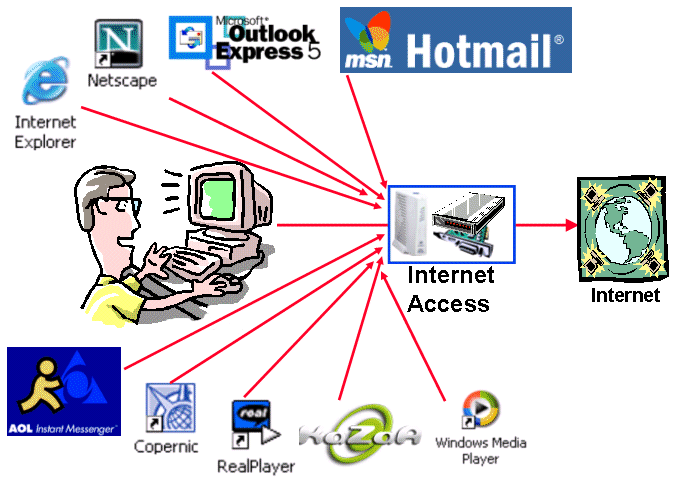
Only you should know the websites you visited. The system administrators have access to system logs, and may find out the websites you visited.

Photo from < http://navigators.com/priv_other_apps.gif>

Module 7: Computer Abuses

Difference between Spamming and Flaming
Spamming is sending unsolicited commercial email or internet junk e-mail to someone you may not know. On the other hand, flaming is sending abusive e-mail or message to someone, with an intention of disrespecting him or attacking him personally.

Difference between a virus and a worm
Virus is a program that reproduces its own code by attaching itself to other executed file. The virus' code is executed when the executable file is run. On the other hand, a worm is self-replicating program to spread across a network even without outside actions needed to take place.

Sample Computer Abuse
Spreading of virus is I think one of the worst computer abuses. It is unethical because it harms the owners/users of the machines that get infected. It may prevent the user from accessing the computer resource and thereby cause potential delays in the work.

Hurricane Katrina Scum
We heard about the tragic event of Hurricane Katrina, causing hundreds of deaths, thousands injured and damaging millions of dollars worth of property. In the Hurricane Katrina scum, some people take advantage of the loss of the people by asking donations through websites and not forwarding such donations to the victims of the catastrophe. This may not happen only with Hurricane Katrina but for all tragedies that some people use to take advantage of the kindness and sympathy of the people to victims of tragedies.